
SEO Best Practices for Modern Websites
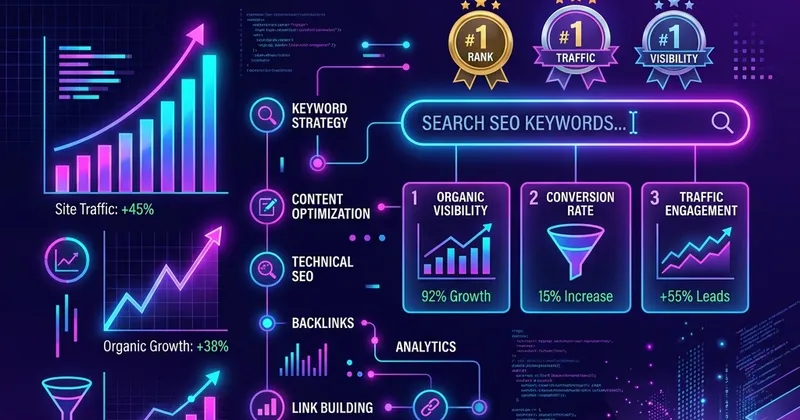
Having a beautifully designed website is only half the battle. If your target audience cannot find your site on search engines like Google, your online presence won’t drive business results. Search Engine Optimization (SEO) is the process of optimizing your site to increase its visibility for relevant searches.
Here are the essential SEO best practices you should implement on every modern website:
1. Structure Content Using Semantic HTML
Search engine crawlers read your HTML to understand the structure and meaning of your content.
- Use one
<h1>per page: This should be your main page title. - Maintain hierarchy: Use
<h2>for main sections,<h3>for subsections, and so on. - Use semantic landmarks: Wrap your content in tags like
<header>,<main>,<article>, and<footer>rather than using generic<div>wrappers everywhere.
2. Implement Structured Data (JSON-LD Schemas)
Structured data provides explicit clues to search engines about the meaning of a page. By including schemas (e.g., Organization, LocalBusiness, Article, or Product schema), you help Google display rich search results (rich snippets), which can improve your click-through rate (CTR).
<script type="application/ld+json">
{
  "@context": "https://schema.org",
  "@type": "WebSite",
  "name": "WebExtended",
  "url": "https://www.webextended.com"
}
</script>
3. Focus on Page Speed and Performance
Google uses page experience (Core Web Vitals) as a direct ranking factor. Fast-loading sites rank higher and convert better.
- Optimize Images: Convert images to modern formats like WebP or AVIF, and always specify
widthandheightattributes to prevent layout shifts. - Minify and Compress Code: Compress HTML, CSS, and JS files, and leverage browser caching.
- Use static site generation (SSG): Frameworks like Astro pre-render HTML, ensuring lightning-fast load times.
4. Optimize Meta Tags and URLs
Make sure every page has:
- A unique, descriptive Meta Title (under 60 characters).
- An engaging Meta Description (under 160 characters) that summarizes the page and encourages clicks.
- A clean, short slug (URL) using hyphens (e.g.,
/category/digital-marketingrather than/cat?id=382).
By combining technical SEO (semantic code and fast performance) with high-quality content, you can climb the search engine rankings and attract sustainable organic traffic.